Esports, short for electronic sports, is organized competitive video gaming, where skilled players and teams compete against each other in video games under structured rules, usually in leagues and tournaments. It takes the same ideas that shape traditional sports — training, teams, competition and spectators — and applies them to video games, creating a global scene watched by millions of fans online and in person.
What makes it esports, not just gaming
The key word is organized. Playing a video game for fun at home is casual gaming. Esports is what happens when that competition becomes structured: players practice seriously, join teams, follow rulebooks, enter tournaments and are ranked against rivals. Just as a weekend kickabout is not the same as a professional soccer league, casual play is not the same as esports. The line is the level of organization, skill and stakes.
At the top level, competitors train for hours a day, study opponents and refine strategy, much like athletes in any traditional sport.
How competition is structured
Esports competition is built around leagues and tournaments. A league runs a season of matches between set teams, often ending in playoffs. A tournament gathers many players or teams to compete over a set period, frequently in a knockout bracket where losers are eliminated. Depending on the game, competitors take part as:
- Individuals — one-versus-one games where a single player represents themselves.
- Teams — squads of players with defined roles, supported by coaches and analysts, competing as an organized roster.
Results feed into rankings and standings, and successful players and teams build reputations across a season, just as they would in any competitive sport.
The main game genres
Esports is not a single game but a collection of titles, usually grouped by genre. Each genre demands different skills:
| Genre | Short for | What it involves |
|---|---|---|
| MOBA | Multiplayer online battle arena | Two teams control characters and try to destroy the other side’s base. |
| FPS | First-person shooter | Fast-paced shooting games seen through the player’s own viewpoint, often objective-based. |
| Battle royale | — | Many players or squads fight on a shrinking map until one remains. |
| Fighting games | — | One-on-one combat between characters, testing reactions and timing. |
| RTS | Real-time strategy | Players build forces and manage resources to outmaneuver an opponent. |
| Sports sims | — | Video game versions of traditional sports played competitively. |
Different genres attract different fans, and a player who excels at a shooter may have little crossover with a strategy specialist.
How fans watch esports
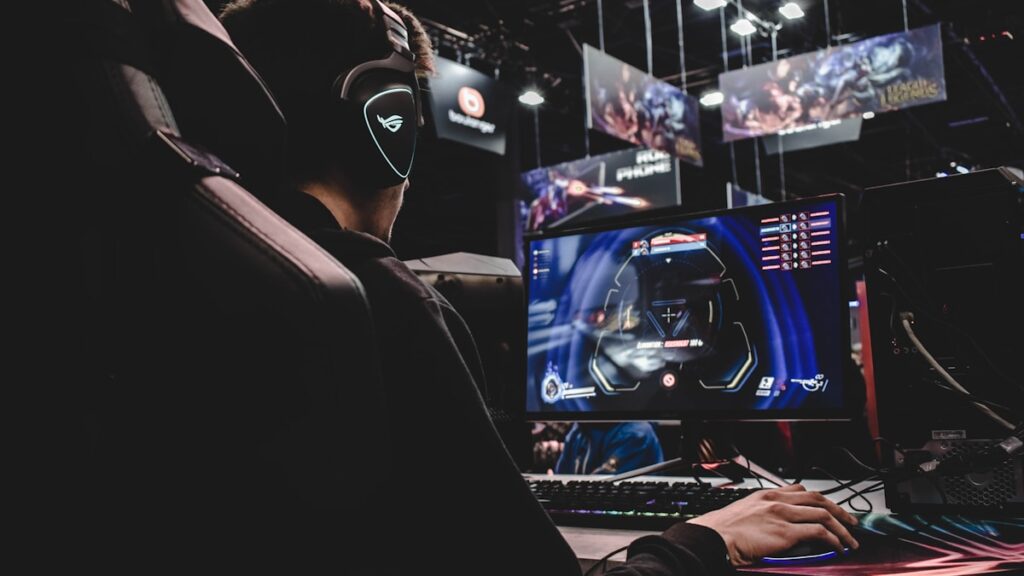
Watching is a huge part of the appeal. Matches are broadcast live on online streaming platforms, so anyone can follow along from home, and major events are staged in arenas with live audiences. Commentators, often called ‘casters’, explain the action and build the drama in real time, much like commentary in traditional sports. Big finals can fill venues and draw large online audiences from around the world.
Roles beyond the players
A professional esports team is more than its five or six competitors. Around the roster sits a support structure that mirrors traditional sports. Coaches plan strategy and prepare the team for opponents. Analysts study footage and data to find edges. Managers handle the day-to-day running of the roster. Behind the scenes, this framework is what turns a group of talented players into a competitive, organized outfit.
There are careers on the broadcast side too. Casters provide play-by-play and expert commentary, observers control the in-game camera so viewers see the key moments, and production crews stage the live shows. All of these roles exist because esports is watched as a spectacle, not just played.
Why esports keeps growing
Part of the appeal is accessibility. Anyone with the game can play the same titles the professionals compete in, which creates a close bond between fans and the top level, closer than in many traditional sports. Games also update over time, with publishers adjusting balance and adding content, so the competitive scene stays fresh. And because everything happens on a screen, matches can be streamed instantly to a worldwide audience with no barrier of distance.
The wider industry
Behind the players sits a whole ecosystem. Teams, or organizations, sign and support rosters. Game publishers create and update the titles and often run the top competitions. Broadcasters, event organizers, coaches and analysts all play a part. Together they form an organized industry, which is exactly what separates esports from simply playing games: it is competitive gaming with the structure, roles and audiences of a professional sport. For a newcomer, the best way in is to pick a game whose style you enjoy, follow a league or tournament in it, and let the commentators guide you through the action.
Frequently asked questions
What does esports mean?
Esports, short for electronic sports, means organized competitive video gaming. Players or teams face off in a video game under structured rules, often for prizes and rankings.
How is esports different from casual gaming?
Casual gaming is playing for fun. Esports is competition at a serious, organized level, with practice, teams, coaches, leagues, tournaments and audiences watching the results.
What games are played in esports?
A wide range, grouped by genre: MOBAs, first-person shooters, battle royales, fighting games, real-time strategy games and sports simulation titles are all common.
How do people watch esports?
Matches are broadcast on live-streaming platforms online and staged at live events in arenas, usually with commentators, or ‘casters’, explaining the action.
Do esports players compete in teams?
Both. Some games are one-versus-one, while many popular titles are team-based, with organized rosters of players supported by coaches and analysts.
Is esports a real profession?
For top competitors, yes. Professional players, along with coaches, broadcasters, organizers and other roles, work full time within an organized industry built around competitive gaming.